the Victorian era
A History of the Vampire in Popular Culturethe Victorian era was not merely the historical setting for vampire stories; it was one of the conditions that made those stories culturally compelling. Victorian society combined rapid industrial and technological change with strict moral codes, religious unease, fascination with the supernatural, and a persistent appetite for deathly imagery. The vampire became a figure through which the period could imagine forbidden desire, social disorder, disease, and freedom from ordinary human limits.
A Culture of Contradictions
the Victorian era is presented as a society suspended between incompatible impulses. Victorian Britain joined “glory and guilt, prim delicacy and delight in the macabre”: industrial development and discovery existed alongside newspaper reports that treated witchcraft as fact. The second Industrial Revolution transformed technology and social life at extraordinary speed, sometimes making new inventions appear almost magical. As familiar structures shifted, many people sought alternative forms of spirituality for stability, or retained older beliefs as a protective response to an increasingly unfamiliar world.
This tension was not simply a conflict between educated modernity and popular ignorance. Arthur Conan Doyle could genuinely believe in fairies, while spiritualism attracted pragmatic members of society to seances undertaken in the hope of approaching God. The same culture that celebrated progress could therefore remain receptive to ghosts, witches, revenants, and vampires. Its intellectual life was marked less by a clean replacement of superstition with science than by the coexistence of scientific ambition, religious longing, and fear of what neither could fully explain.
Sexuality, Discipline, and the Vampire Imagination
The period’s strict regulation of sexuality gave vampire fiction a particularly charged imaginative function. Sex was represented as dangerous and was supposed to be confined to heterosexual marriage, preferably for producing children. Masturbation was treated as an unspoken horror, while popular medical imagery warned that “self love” could destroy health and happiness. Desire was thus made into a threat requiring supervision, and the vampire offered a supernatural embodiment of appetite released from those boundaries.
Count Dracula illustrates this contradiction. Despite his restrictions—sleeping in coffins and sometimes living like an animal—he is imagined as a kind of freedom that Victorian respectability made difficult to acknowledge openly. He can pursue hunger, lust, and personal will without observing the social rules governing respectable human conduct. Lucy Westenra’s fate intensifies the connection between female desire and punishment: she is openly aware of her emotions, is desired by several men, and expresses a wish that all of her suitors might be satisfied. In the narrative, that sexual openness becomes grounds for her destruction, as Count Dracula uses her to feed both his hunger and his lust before turning her into a stepping stone toward Mina.
The vampire therefore registers both repression and wish fulfillment. The genre’s growth during the nineteenth century corresponds to an era of starched collars, prim manners, religious propriety, and social rules, but beneath that surface lay fear, loathing, and lust. Vampire fiction gave those impulses a body that could be condemned as monstrous while still being watched with fascination.
Progress, Disease, and Supernatural Fear
The Victorian era’s confidence in progress did not remove fear; it often supplied fear with new forms. Across the nineteenth century, a vampire panic took hold in New England as tuberculosis spread through households. Known as “consumption” because it seemed to consume the victim’s health, the disease was highly contagious, but its transmission was poorly understood. Families could interpret a chain of deaths as evidence that the first victim had returned from the grave to drain the life force of surviving relatives.
This medical uncertainty reveals why supernatural explanations could survive within a modernizing society. Disease made death appear arbitrary, intimate, and invisible: no one knew who would be next or why one household member died while another survived. Folk belief supplied a target for otherwise unmanageable fear. The dead body became an explanation for the living body’s decline, and the vampire transformed contagion into an intentional assault.
The same wider habit of interpreting the inexplicable through supernatural narratives appears in the eighteenth-century vampire craze that preceded the Victorian era and continued to shape later culture. Villages in eastern Europe dug up suspect corpses and staked them, while the Mercy Brown vampire incident in Exeter, Rhode Island, showed how medical evidence could be overridden by communal terror. In the Victorian cultural imagination, such earlier episodes helped establish the vampire as a bridge between folklore, public panic, disease, and the limits of professional knowledge.
Law, Media, and the Management of the Macabre
The Victorian era also inherited a long history of formal and informal attempts to control supernatural knowledge. Antoine Augustin Calmet, a Benedictine monk and respected scholar from Lorraine, published The Phantom World in 1746 and revised it in 1751. His work collected material concerning angels, demons, spirits, revenants, and vampires, demonstrating that vampire belief could enter learned religious and scholarly discourse rather than remain solely a village superstition.
Later media continued to circulate such fears while institutions tried to regulate their effects. In 1954, the Gorbals Vampire incident in Glasgow was taken up by the national press, which blamed imported horror comics for children’s hysteria and discussed banning the genre. The Daily Mirror called for action, while a government memo argued that the comics were not obscene under the existing law but were nevertheless harmful to children and should be subject to comparable restrictions. The episode shows how the vampire could move from folklore into mass media and then become an object of governmental concern.
That pattern echoes the Victorian era’s own cultural contradiction: modern communication and social administration did not eliminate belief in the macabre but helped distribute it more widely. Newspapers, novels, religious scholarship, and later film all converted supernatural fears into portable cultural forms. The vampire survived not because modernity failed, but because modernity gave old fears new channels.
Afterlife in Modern Culture
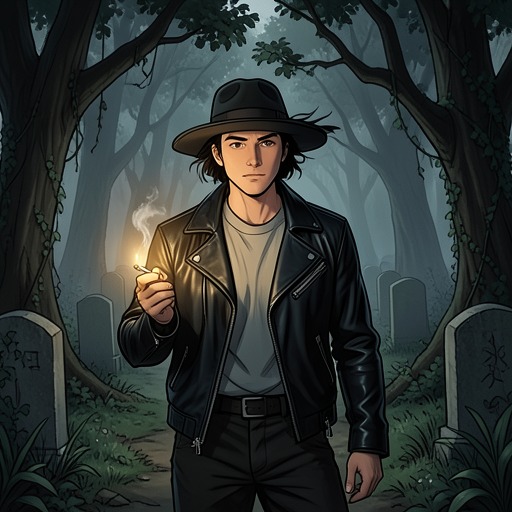
The Victorian era remains central to the modern styling of the vampire and the Gothic. Its mourning culture, architecture, clothing, sexual codes, and fascination with death continue to supply the imagery of contemporary Gothic identity. Modern audiences can romanticize the period partly because technological comfort has created enough distance from its poverty, disease, abuse, lice, dangerous childbirth, and low infant-survival rates. What was harsh reality for Victorian people can become an aesthetic of velvet, ruins, mourning wear, and controlled darkness for later consumers.
This aesthetic transformation is inseparable from the vampire’s enduring appeal. Modern portrayals often make immortality attractive because it removes ordinary anxieties: the immortal need not pay bills, hold a job, or worry about the short-term pressures that govern mortal life. Vampires are consequently shown as wealthy, charismatic, beautifully dressed figures, even though their imagined freedom rests on death and predation. the Victorian era supplies the historical atmosphere in which that paradox feels most natural: a world of severe restraint that simultaneously generated fantasies of limitless appetite.
The continuing popularity of Goth, whose roots emerged from post-punk clubs in Britain during the early 1980s, demonstrates how Victorian imagery has outlived its original social setting. Mourning clothes, fake fangs, skull ornaments, spiderweb jewelry, and black decoration turn the era’s death-conscious visual language into a chosen identity. World Goth Day, founded around a 22 May celebration of Gothic existence, extends that process from private fascination into community and public performance. The Victorian era thus persists less as a closed historical period than as a durable cultural vocabulary through which later generations explore sex, death, fear, beauty, and the desire to step outside ordinary life.